
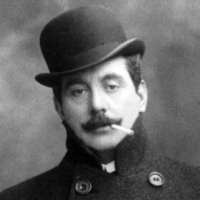
Spätromantik
Giacomo Puccini
1858 – 1924
Über diesen Komponisten
“Giacomo Antonio Domenico Michele Secondo Maria Puccini (italienisch [ˈdʒaːkomo putˈtʃiːni]; * 22. Dezember 1858 in Lucca; † 29. November 1924 in Brüssel) war ein italienischer Komponist. Er ist bekannt für seine oft gespielten Opern. Puccini entstammte einer Musikerfamilie, die über mehrere Generationen Berufsmusiker hervorgebracht hatte, und ergriff, der Familientradition folgend, ebenfalls den Musikerberuf. Nachdem er unter anderem am Konservatorium in Mailand studiert hatte, schrieb er für einen Musikerwettbewerb, der die italienische Musik fördern sollte, seine erste Oper Le Villi.”
Quelle: Wikipedia · CC BY-SA 4.0
Vocal
Vexilla regis, for tenor, bass, and organ
Ad una morta!
A te, "O quanto è vano"
Canto d'anime
Casa mia, casa mia
Ecce sacerdos magnus, for a cappella choir
E l'uccellino
Storiella d'amore
Sole e amore
Inno a Diana
Inno di Roma
Mentì all'avviso
Morire?
Motet et Credo, for baritone, chorus, and orchestra, "Per San Paolino"
Nessun Dorma
O soave fanciulla
Requiem, for chorus and chamber ensemble
Salve del ciel regina, for soprano and organ
Cessato il suon dell'armi, cantata for tenor solo, chorus, and orchestra
Messa di Gloria, for tenor, baritone, bass, chorus, and orchestra in A flat major
Avanti, Urania!
E lucevan le stelle
Chamber
Keyboard
Stage
Sonstiges
Chrysanthemums / In Memory of Amedeo of Savoy, Duke of Aosta
"Chi il bel sogno" from the opera "La Rondine"
La bohème: Yes, they call me Mimi!
Duet of Mario Cavaradossi and the Jailor from "Tosca"
Recondita armonia
Your tiny hand is frozen (Aria of Rodolfo from the opera "La Bohème")
Arias, Choruses and Overtures
aria's
O my beloved father
Musetta's Waltz from La Bohème
Suzuki
Nessun dorma from the opera Turandot
Terra e mare
Giacomo Puccini per stad