
Late Romantic
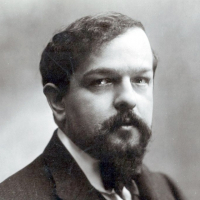
Claude Debussy
1862 – 1918
About this composer
“Achille Claude Debussy (French: [aʃil klod dəbysi]; 22 August 1862 – 25 March 1918) was a French composer, born in Saint-Germain-en-Laye. He is sometimes seen as the first Impressionist composer, although he vigorously rejected the term. He was among the most influential composers of the late 19th and early 20th centuries. Born to a family of modest means and little cultural involvement, Debussy showed enough musical talent to be admitted at the age of ten to France's leading music college, the Conservatoire de Paris. He originally studied the piano, but found his vocation in innovative composition, despite the disapproval of the Conservatoire's conservative professors.”
Source: Wikipedia · CC BY-SA 4.0
There are no upcoming concerts with works by this composer.
Orchestral
Nocturnes, L.91
Intermezzo, for cello and orchestra
Le martyre de Saint Sébastien, for soloists, chorus and orchestra, L.124
Incidental music
Rhapsody, for alto saxophone and orchestra, L.98
Suite Bergamasque, no. 3, for orchestra
Images, L.122
Fantaisie, for piano and orchestra, L.73
Le roi Lear, L.107
Le triomphe de Bacchus
Première rapsodie, for clarinet and orchestra
Première Suite, for orchestra
Printemps, symphonic suite for chorus, piano and orchestra, L.61
Symphony in B minor
Danse sacrée et danse profane, for harp and orchestra, L.103
Prélude à l'après-midi d'un faune, L.86
La Mer, L.109
Three symphonic sketches
Keyboard
6 Épigraphes antiques, for piano 4-hands, L.131
Fugue pour le concours d'essai, Prix de Rome Competition
Marche écossaise, sur un thème populaire, for piano 4-hands, L.77
Ouverture 'Diane', for piano 4-hands
Pour le piano, L.95
Ballade, for piano 4-hands
Ballade slave, L.70
Berceuse héroïque, L.132
La plus que lente, L.121
En blanc et noir, for 2 pianos, L.134
D'un cahier d'esquisses, L.99
Danse bohémienne, L.9
Divertissement, for piano 4-hands, L.36
Elégie, L.138
Estampes, L.100
Fugue pour le concours de fugue
Hommage à Joseph Haydn, L.115
Images, Book 2, L.111
Images inédites, L.87
Images oubliees
Intermède
Le petit negre
Le petit nègre, L.114
Étude retrouvée, for piano
Études, L.136
Masques
Suite Bergamasque, L.75
Préludes, Book 2, L.123
Les soirs illuminés par l'ardeur du charbon, for piano
Lindaraja, for 2 pianos, L.97
Masques, L.105
Mazurka, L.67
Morçeau de concours, L.108
Nocturne, L.82
Page d'album, L.133
Petite suite, for piano 4-hands, L.65
Pièce san titre
Première Rhapsodie, for piano
Rêverie, L.68
Valse romantique, L.71
L'isle joyeuse, L.106
2 Arabesques, L.66
Children's Corner, L.113
Tarantelle styrienne, L.69
Images, Book 1, L.110
Préludes, Book 1, L.117
6 Épigraphes antiques, L.131
Vocal
Beau soir, L.6, "Lorsque au soleil couchant les rivières sont roses"
L'enfant prodigue, scène lyrique for voices and orchestra, L.57
Caprice
2 Romances
2 Romances, L.79
3 Ballades de Villon, L.119
3 Chansons de Charles d'Orléans, L.92
3 Mélodies, L.81
3 Poèmes de Mallarmé, L.127
5 Poèmes de Baudelaire, L.64
Aimons nous et dormons, L.16
Apparition, L.53
Ariettes oubliées, L.60
Berceuse, L.93, "Il était une fois une fée qui avait un beau sceptre"
Chansons de Bilitis, L.90
Chanson espagnole, song for 2 voices and piano, L.42
Chansons de France, L.102
Coquetterie posthume, L.39
Dans le jardin, L.78, "Je regardais dans le jardin"
Fantoches, L.21
Fleur des blés, L.7
Flots Palmes Sables
Fête galante, L.23
Fêtes galantes, Set 1, L.80
Fêtes galantes, Set 2, L.104
Hymnis, for voice, chorus, and orchestra, L.37
Il dort encore
Invocation, cantata for male chorus and orchestra, L.40
Jane
L'archet
La belle au bois dormant, L.74
La grotte
La romance d'Ariel, L.54
Le gladiateur, cantata for 3 soloists and orchestra, L.41, "Mort aux Romains, tuez jusqu'au dernier"
Le lilas, L.22
Le Printemps, cantata for women's chorus and orchestra, L.24
Le promenoir des deux amants, L.118
Les Angélus, L.76, "Cloches chrétiennes pour les matines"
Les papillons
Les roses, L.13
Trois mélodies de Verlaine
Madrid, princesse des Espagnes
Mandoline, L.29
Musique, L.44
Noël des enfants qui n'ont plus de maison, L.139
Nuit d'étoiles, L.4
Nuits blanches
Pantomime, L.31
Paysage sentimental, L.45
Pierrot, L.15
Proses lyriques, L.84
Regret, L.55
Romance: Silence ineffable
Romance: Silence ineffable, L.43
Romance: Voici que le printemps, L.52
Rondeau, L.30
Rondel chinois, L.17, "Sur le lac bordé d'azalée"
Serenade
Souhait, L.11
Sérénade, song for voice and piano, L.34
Tragedie
Zéphyr, L.12
La fille aux cheveux de lin, L.33
Rêverie, L.8
La damoiselle élue, for womens voices and orchestra, L.62
Chamber
Chansons de Bilitis, for narrator, 2 flutes, 2 harps and celesta, L.96
Piano Trio, L.3
Nocturne and Scherzo for Cello and Piano, L.26
Petite Pièce, for clarinet and piano, L.120
Syrinx, for solo flute, L.129
Cello Sonata in D minor, L.135
Premiere Rhapsodie for Clarinet and Piano, L.116
Sonata for Flute, Viola and Harp, L.137
Violin Sonata in G minor, L.140
String Quartet in G minor, L.85, op. 10
Stage
Other
Images for Orchestra
Syrinx
Images, Book 1: I. Reflections in the Water II. Homage to Rameau III. Movement
Impressions of Pelléas
Impressionismus
Evening Song
String Quartet
III. Mouvement
Gardens in the Rain
Clair de Lune (Orchestral Version by André Caplet)
The Joyful Island
Images II for Piano
Apparition (The Moon Was Sad) for Voice and Piano
Petite Suite (Menuet)
Clouds. Moderate from: Nocturnes L 91 for large orchestra and women's choir
Der Wald und das Meer
Pagodas from "Estampes" for Piano
Jeux (Version for Two Pianos)
The Sea (arrangement for piano trio by Sally Beamish)
Pagodas
The Sunken Cathedral
Sirens
The Sea: Three Symphonic Sketches